New York Rangers report card: grading goalies, defensemen to start 2026

More than halfway through the 2025-26 season, the New York Rangers are somewhat surprisingly one of the best defensive teams in the NHL. If they’re going to be a serious playoff contender, that must continue into the 2026 calendar year.
After their memorable 5-1 Winter Classic win over the Florida Panthers on Jan. 2, the Rangers (20-18-5) own the sixth-lowest team goals-against average in the NHL (2.72). That’s significant for many reasons, not the least of which is that the Rangers are also 31st in the League in scoring, averaging 2.60 goals per game.
There’s a new defensive system in place under coach Mike Sullivan. The team-wide buy-in to this structure is admirable — and key to their success on that side of the puck.
The forwards are certainly part of the improved defensive play. But here, we focus on the Rangers goalies and defensemen, and grade each midway through the season.
As a group, Rangers goalies receive an A- collective grade, best of all position groups on the team at this juncture of the season. The defensemen collectively receive a B-.
Keep in mind that the defensemen are graded on all aspects of their game — so, not just defense, but offense, as well.
Now, let’s hand out individual report cards for the Rangers goalie and defensemen.
Igor Shesterkin: A-
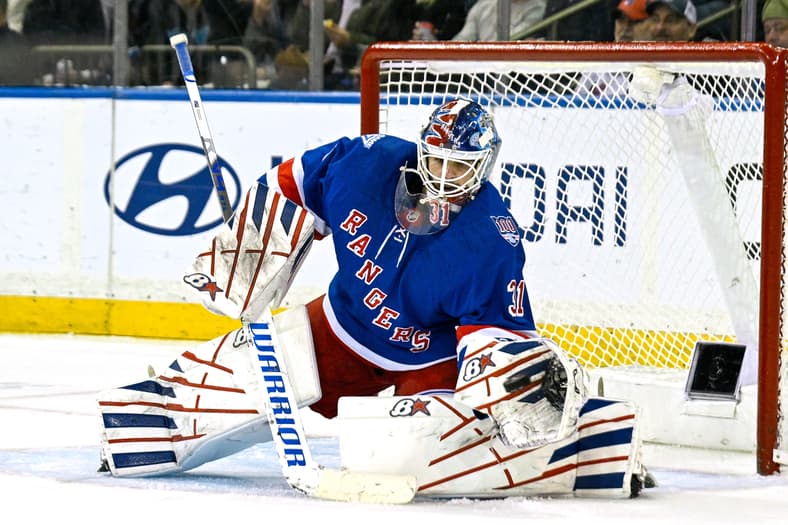
No goalie’s started more games, faced more shots, nor made more saves so far in the NHL this season than Igor Shesterkin. He’s allowed two or fewer goals in more than half of his starts (17 of 33), and rebounded quickly after a brief dip in performance in late October. His goals-against average and save percentage are considerably better this season than last, due in part to better defensive play in front of him. But he’s also more consistent game to game than a year ago. Shesterkin’s 14.8 goals saved above expected, per MoneyPuck, is third-best in the League — and just one metric to show how invaluable he is to the Rangers.
Jonathan Quick: A-
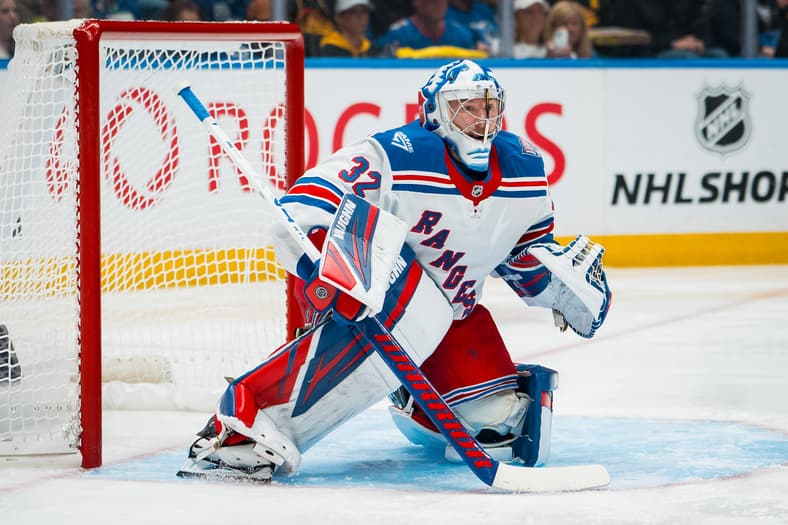
Don’t be fooled by his 3-6-1 won-loss record; Jonathan Quick is having a helluva season. In his seven losses, the Rangers scored nine goals total and were shut out twice. Quick remains one of the best backup goalies in the NHL, even as he approaches his 40th birthday later in January. Among goalies who started at least 10 games this season, Quick is second in the NHL with a 2.11 GAA and .924 save percentage. He didn’t allow more than three goals until his 10th — and most recent — start, a 6-3 loss to the Washington Capitals on New Year’s Eve.
Adam Fox: B+
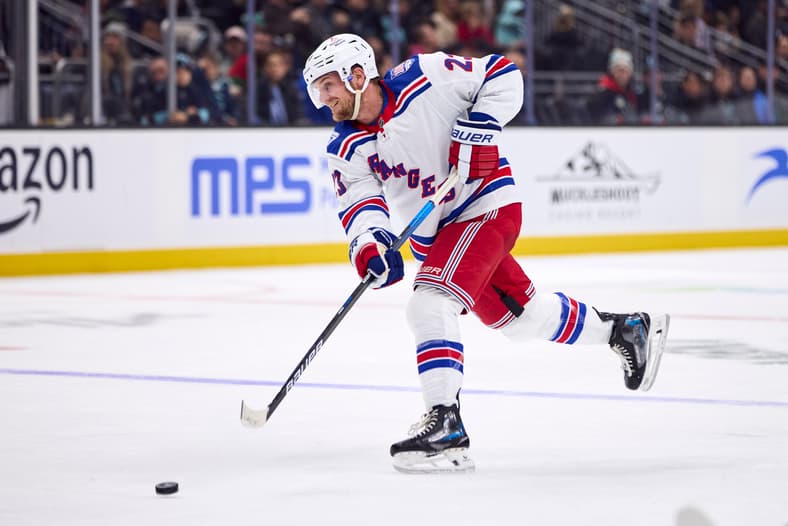
Though Adam Fox failed to land a spot on the United States roster for the 2026 Milan-Cortina Olympics, he remains the most important defenseman on the Rangers. There’s so much understated nuance to his game on both sides of the puck, such subtle elite play, that Fox often is underappreciated for how terrific a player he is. No one drives play for the Rangers like Fox, whose expected goal share is above 60 percent, per Natural Stat Trick. He’s averaging nearly 24 minutes TOI per game, and is pretty much at a point-per-game pace (28 points in 29 games). The Rangers missed him badly during his 14-game injury absence, especially his ability to effectively quarterback the power play.
Vladislav Gavrikov – B+
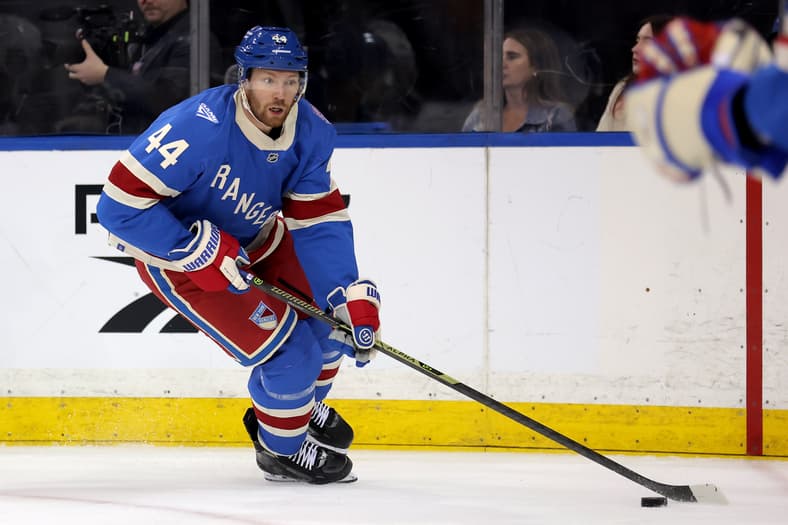
Vladislav Gavrikov is everything the Rangers hoped he’d be when they signed him to a seven-year, $49 million contract July 1 — and then some. The 30-year-old is the backbone of a vastly improved defense corps, with his smart, reliable, physical play. He and Fox complement each other well, and they comprise one of the best defense pairings in the League. The pleasant surprise here is Gavrikov’s offensive production. He already has a career-high seven goals, including the memorable overtime winner against the Dallas Stars on Dec. 2.
Matthew Robertson: B
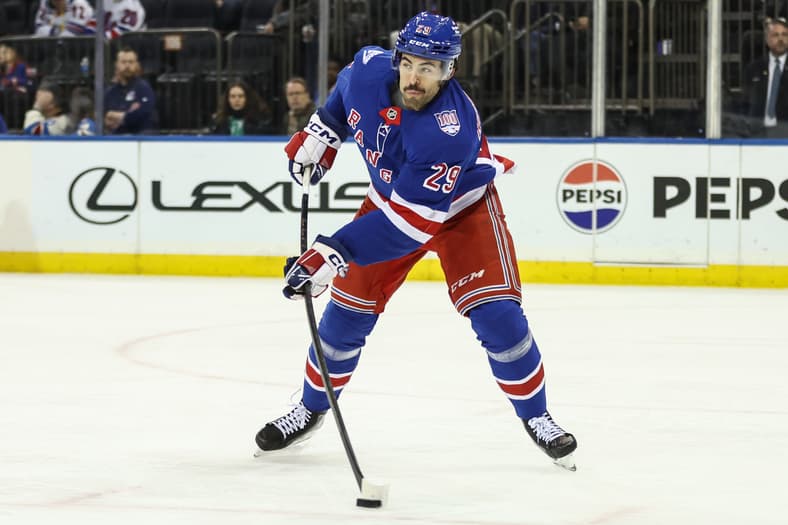
Talk about pleasant surprises. Not many had Matthew Robertson being a lineup regular heading into this season; but the 24-year-old rookie is just that, averaging better than 16 minutes TOI per game. A late bloomer who played four seasons in the minors, Robertson largely is a bottom-pair staple these days, though he didn’t look out of place when given opportunity on the second pair. Robertson is physical — his 5.63 hits per 60 minutes are second among Rangers defensemen — and looks confident in the offensive game, with two goals, seven points and a heavy shot from the point.
Braden Schneider: B-
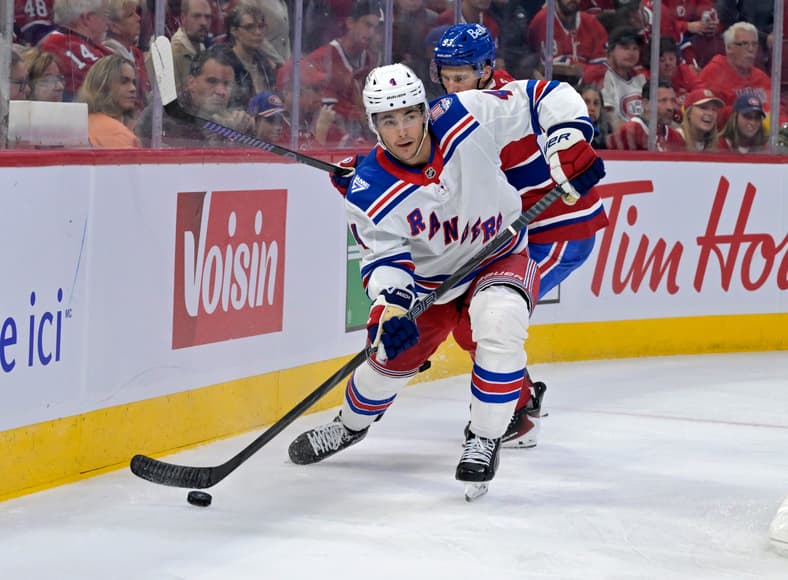
Braden Schneider is a difficult player to grade. On one hand, Schneider stepped up and filled in admirably on the top defense pair during Fox’s month-long injury absence. On the other, many of his metrics are worst among Rangers defensemen. The 24-year-old does lead the defense corps with 91 hits and 72 blocked shots, and he’s a solid penalty killer. Schneider doesn’t generate much offense, and he certainly didn’t take to the role as power-play quarterback. Gavrikov replaced him on the point of PP2. Overall, Schenider’s been good, just less than hoped for.
Will Borgen: B-
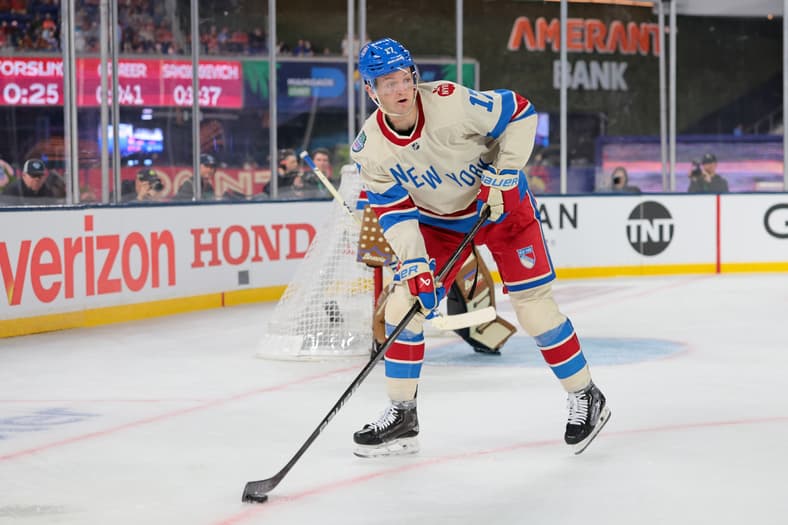
Will Borgen’s role with the Rangers isn’t sexy, but it’s crucial. Borgen is a physical, shutdown defender, tasked with consistently facing the opposition’s better forwards. He’s done an admirable job in that role — and at an affordable $4.1 million salary cap hit. The 29-year-old’s been a seamless fit on the second defense pair since the Rangers acquired him from the Seattle Kraken last season, though he’s likely a third-pair defenseman on a true Stanley Cup contender. That said, there’s plenty to like about what Borgen gives the Rangers game-in and game-out.
Carson Soucy: C+
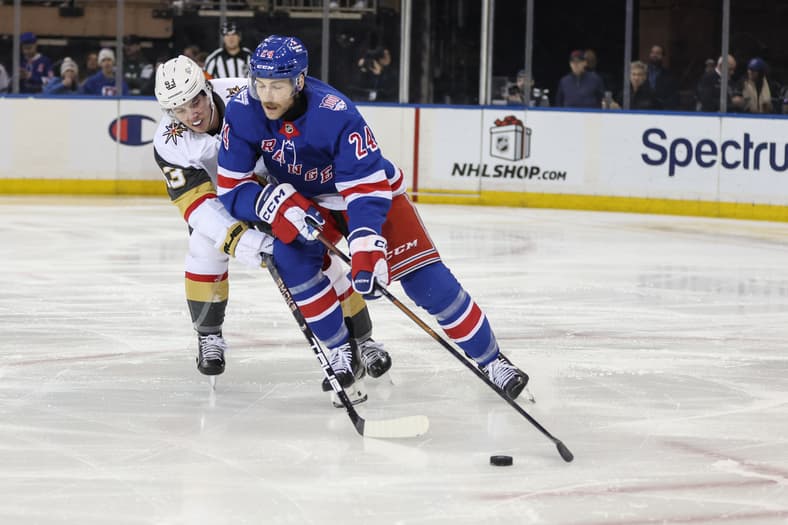
Carson Soucy is Borgen’s regular partner on the second pair, and largely played above expectations after a decided downturn in his disappointing performance last season with the Rangers and Vancouver Canucks. The 31-year-old leads Rangers defenseman at plus-7 and has been on ice for 20 goals-for and 15 against at 5v5. Like Borgen, he’s a pretty steady veteran with a physical edge to his game. But unlike his partner, Soucy plays hot potato with the puck and loses his man a bit too often, which partially explains his 45.75 percent xGF percentage and why he’s been on for 116 high-danger chances against 5v5.
Scott Morrow: C–
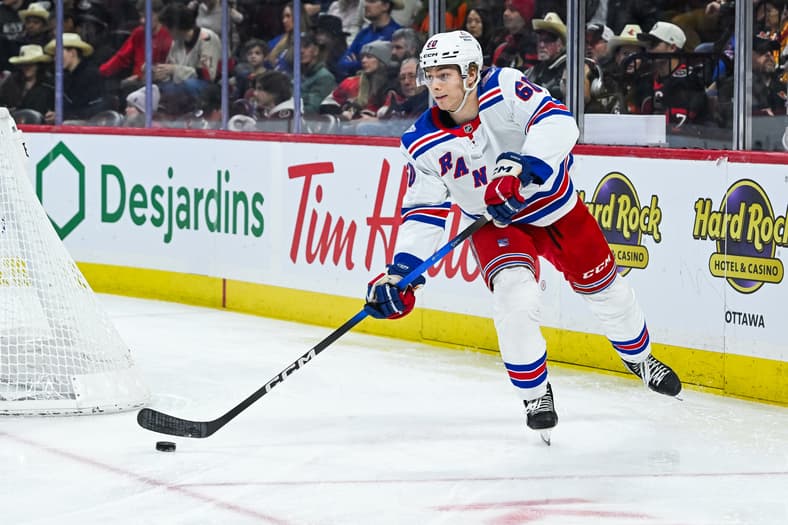
Though coach Mike Sullivan praised Scott Morrow often with his words, how he deployed the rookie when Fox was out spoke volumes. Simply put, Sullivan doesn’t trust Morrow, an offensively-gifted defenseman whose defensive game still needs work. No sin there. The kid is 23 and still developing his overall game. But his season feels disappointing. Not just in the NHL, where he has three assists in 16 games with the Rangers, but with Hartford of the American Hockey League. The 2025 AHL All-Star, whom the Rangers acquired from the Carolina Hurricanes in the K’Andre Miller trade during the offseason, has five points (one goal, four assists) in 14 AHL games.
Urho Vaakanainen: D+
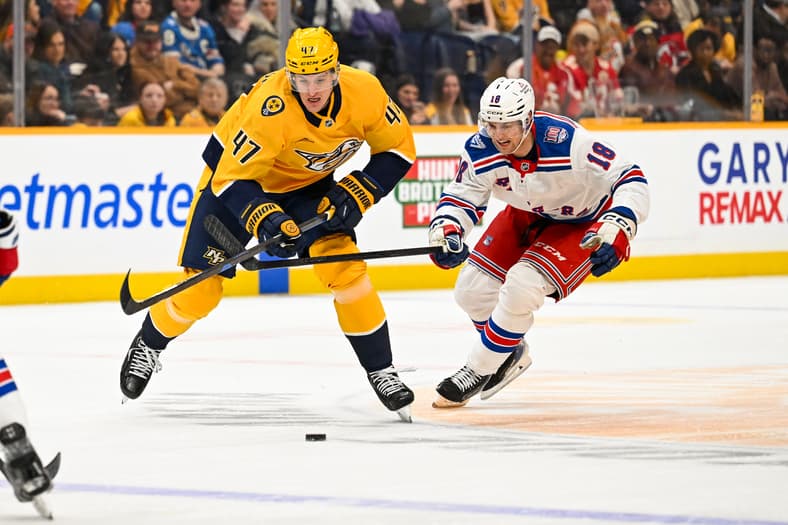
Listen, Urho Vaakanainen hasn’t been atrocious. But he is a disappointment. The Rangers thought the former first-round pick by the Boston Bruins was an improving NHL player with growing upside, and a nice fit on the third defense pair, which is where he started the regular season. It didn’t take long for the 27-year-old to lose Sullivan’s trust — and his regular spot to Matthew Robertson. No Rangers defenseman has less average ice time than Vaakanainen (a career-low 13:40), who spots in occasionally these days and played just 19 of New York’s first 43 games.