Why Rangers Have So Few Prospects: 30‑Year Pattern of Trading Away Future

For more than 30 years, mostly under the stewardship of owner James Dolan, the New York Rangers consistently failed to build a base of prospects, underscored by their recent plummet to the bottom of the NHL standings in 2025-26.
The Rangers lean on a steady cycle of “retooling,” trading draft picks and young players for veterans and using free agency to stay competitive. The approach did help the Rangers win the Stanley Cup in 1994, ending a 54-year championship drought, and keep them relevant with five appearances in the Eastern Conference Final since 2012.
But it also left the Rangers with one of the thinnest prospect pools in the NHL.
Worse, there’s been no Stanley Cup championship since 1994, and only appearance in the Cup Final, a five game loss to the Los Angeles Kings in 2014.
Draft Capital Lost
The numbers show how deep the problem runs. The Rangers took part in 31 drafts since 1994. They entered 11 of those drafts without a first‑round pick. They also had six first‑round picks who produced no NHL value. In total, 17 drafts — more than half — delivered no first‑round impact.
The issue extends beyond the top of the board. For nearly two decades, the Rangers averaged four to five picks per draft. Most teams make, on average, seven. That gap adds up. New York effectively traded away 60 to 90 total picks over the Dolan era of ownership.
Philosophy Built on Stars
Inside Madison Square Garden, management believed fans wanted star power. The idea was simple: New York is a star market, and Ranger fans won’t accept a roster built around rookies and younger players. Every general manager — Neil Smith, Glen Sather, Jeff Gorton and Chris Drury — operated under the same directive: stay competitive and avoid a rebuild.
That approach pushed the club toward short‑term moves. Picks were traded for veterans. Free agents filled holes. Prospects were rushed or moved out. The team stayed relevant, but the pipeline never grew.
Fan Pressure and Perception
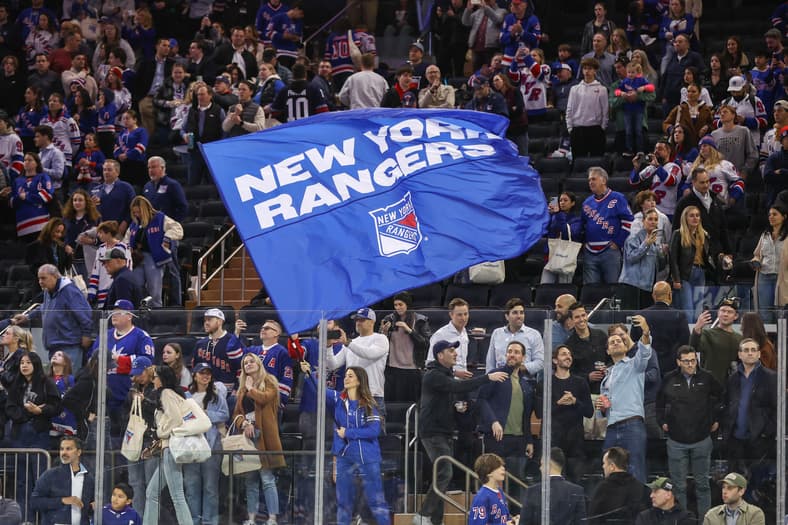
Ranger fans play a part here, too. Each offseason brings loud calls to trade for the biggest name or sign the top free agent. That noise reinforced ownership’s belief that patience won’t work in the Big Apple.
“It’s absolutely different [in New York],” Smith told Forever Blueshirts on the Rink Rap podcast this week. “The tickets cost more. Concessions cost more. The transportation to get there is more tedious. Everything’s harder and everything is more money. So, the expectation of the person that’s on the other end of those payments is going to expect more.
“And it’s not all just money. Part of it’s New York — if you can do it here, you can do it anywhere. … Your expectations are higher. That’s just what you face in New York.”
But the Garden often tells a different story. The most popular Rangers tend to be homegrown players. Henrik Lundqvist, Ryan Callahan, Dan Girardi, Jesper Fast, Chris Kreider, and Igor Shesterkin all earned long‑term support because they developed inside the organization.
Homegrown Players Still Resonate
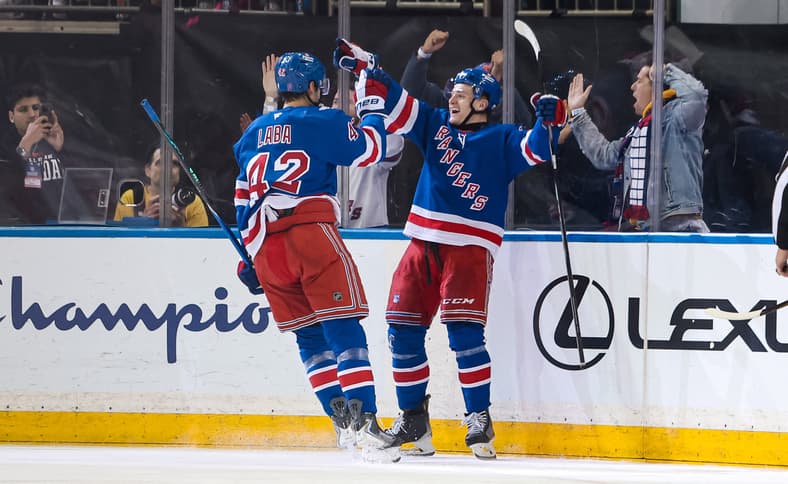
Last season offered fresh proof. Fans embraced Noah Laba, Jaroslav Chmelar, Adam Sýkora, Dylan Garand, and Matthew Robertson. None arrived with hype. All earned their minutes. The Garden more than responded, they adopted and cheered. Include 2023 first-rounder Gabe Perreault, a higher-profile prospect, in that mix, too.
The reaction underscored a long‑standing truth: Ranger fans connect quickly with players who come through the system, regardless of draft position.
Pipeline That Never Formed
The long‑term impact is clear. The Rangers have no first‑line center prospects. They have no long‑term goalie prospect behind Shesterkin. Their current top homegrown defensive prospect is a third-round pick in Drew Fortescue. They lack NHL‑ready depth and have few internal options to replace aging core players.
This is not the result of one bad draft or one front office. It is the product of a long stretch of traded picks and short‑term decisions.
Rebuild That Didn’t Last
In 2018, the Rangers announced a rebuild. Fans accepted it. The Garden stayed full. The message was clear: New York would support a long‑term plan.
The rebuild worked — until it didn’t. Ownership shifted back toward urgency. The club added stars and accelerated the timeline. Draft picks didn’t pan out. The pipeline thinned again.
Test Ahead
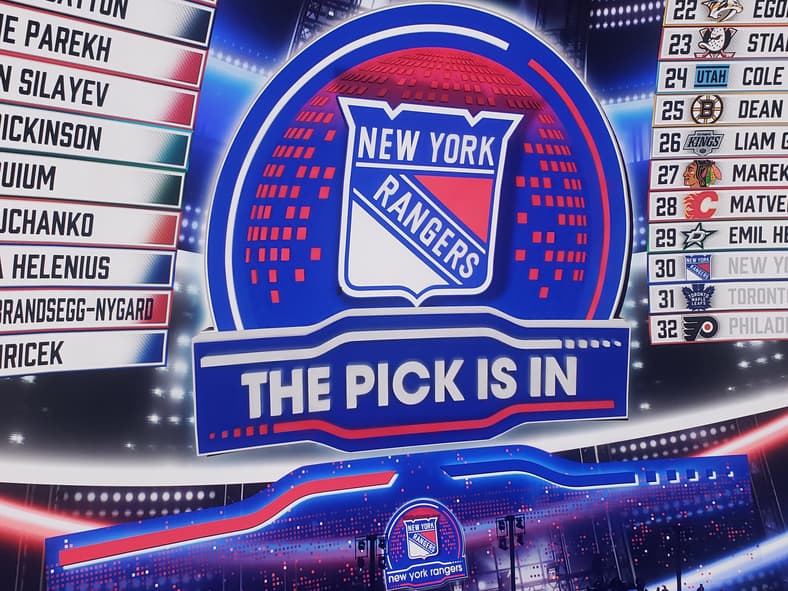
The 2026 draft may be a turning point, when the Rangers have 11 picks, including Nos. 5 and 26 in the first round. If the Rangers keep all their picks, it will be their largest draft class since 2004. That alone shows how rare it has been for the franchise to build through the draft.
But even with so many selections, Smith warned that one good draft can’t save the Rangers.
“Eleven picks, you won’t get 11 NHL players out of that,” he explained. “If you’re really good, you’ll get four, and if you’re unbelievable, you’ll get five.”
But it sure would be a good start.
However, whether the Rangers break the cycle during this current retool or repeat it will shape what happens the next decade.