Why Rangers Didn’t Make Mistake With Igor Sheterkin $92 Million Contract

The New York Rangers made Igor Shesterkin the highest-paid goaltender in NHL history when they signed him to a $92 million contract back in December 2024.
It’s fair to wonder whether that investment was the right one, especially given that the Carolina Hurricanes just won the Stanley Cup, all while spending less than $6 million on their entire goaltending threesome comprised of Frederik Andersen, Brandon Bussi, and Pyotr Kochetkov.
There are those in the NHL believed who believe spending a large portion of the salary cap on goalies makes it harder to build a Stanley Cup-winning team. But the debate isn’t that simple.
The Hurricanes proved that a team can win without a highly-paid goalie, but the Rangers are betting that having one of the best players in the world between the pipes is worth the investment. And with the NHL salary cap projected to continue rising in the coming years, Shesterkin’s contract may not be as restrictive as it first seemed.
Rising NHL Salary Cap Builds Case that Rangers Star Not Overpaid
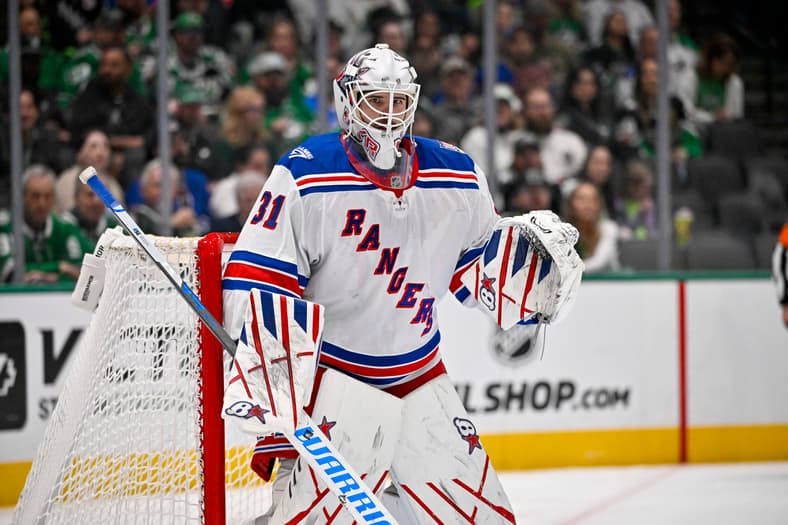
Much of the buzz surrounding Shesterkin’s contract centers on the $11.5 million AAV attached to it. However, when Shesterkin signed his extension, the contract accounted for 12 percent of the Rangers’ salary cap. Fast-forward to the present day, though, the NHL cap increased to $104 million for the 2026-27 season and is set to rise to $113.5 million in 2027-28, with projections indicating it could reach as high as $123 million the following season.
As the cap continues to climb, Shesterkin’s contract accounts for a smaller percentage of the team’s payroll each year. By the time the cap reaches $113.5 million, his cap hit will represent just over 10 percent of the salary cap, and if the cap reaches $123 million, that number drops to roughly 9.5 percent.
Perhaps the strongest argument against the idea that Shesterkin’s contract is holding the Rangers back can be found in the team’s current cap situation. Despite carrying the largest goalie contract in NHL history, the Rangers are still projected to have more than $25 million in available cap space entering the 2026-27 season, per PuckPedia.
That’s important because it challenges one of the biggest criticisms of Shesterkin’s deal. If his contract were truly preventing the Rangers from building a contender, they wouldn’t be entering the summer with enough cap space to pursue unrestricted free agents, target restricted free agents with offer sheets, or take on big contracts in trades.
A look around the League shows the Rangers aren’t alone in their willingness to invest heavily in the position. Two-time Stanley Cup champion Andrei Vasilevskiy carries a $9.5 million cap hit in Tampa Bay, while Connor Hellebuyck, Jake Oettinger, Jeremy Swayman, Linus Ullmark, and Ilya Sorokin each earn at least $8.25 million annually.
And the Florida Panthers reached the Cup Final three consecutive years from 2023-25, winning twice, with Sergei Bobrovsky making $10 million per season on a deal signed five years before the Rangers locked up Shesterkin.
In fact, the Rangers aren’t even the League’s biggest spender in net. That distinction, if you will, belongs to the Vancouver Canucks, who are projected to spend $13 million in cap space on their goalies next season, which includes Thatcher Demko’s $8.5 million cap hit and Kevin Lankinen’s $4.5 million AAV. By comparison, the Rangers are projected to spend $12.4 million on Shesterkin and Dylan Garand.
Don’t forget to factor in that Shesterkin was 29 when this coontract kicked in last season, is 30 now, and will be 37 at its conclusion in 2033. That’s pretty much his prime years. By way of comparison, Bobrovsky was 34-36 when he led the Panthers to three straight trips to the Stanley Cup Final.
Igor Shesterkin Continues to Justify Rangers’ Big Investment
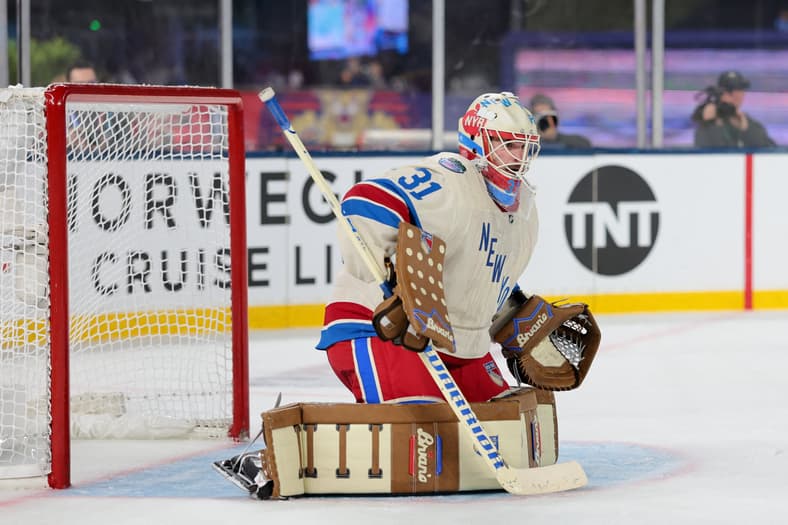
Lost in the debate surrounding Shesterkin’s contract is the reality that the Rangers aren’t paying an average goalie $11.5 million per season. This is Shesterkin we are talking about, one of the best goalies in the world.
Despite playing behind a team that finished with the worst record in the Eastern Conference, Shesterkin bounced back after what many considered a disappointing 2024-25 campaign. He posted a .912 save percentage, 2.50 goals-against average, and 21.3 goals saved above expected this past season, ranking among the top NHL goaltenders in several categories.
Those numbers become even more impressive given the circumstances. The Rangers were shut out nine times during the season and frequently struggled to generate offense, often leaving the 2021-22 Vezina Trophy winner with little to no room for error. Yet night after night, he continued to give the Rangers a chance to win.
After sustaining a lower-body injury on Jan. 5, Shesterkin missed 13 games. During that stretch, the Rangers lost 11 times and watched their season spiral out of control. By the time he returned following the Olympic break, the organization already shifted its focus toward a retool.
If anything, Sheskerin’s performance this past season reinforced how difficult it is to find a player capable of providing the impact he brings every night. Even during successful seasons, Shesterkin masked flaws throughout the lineup and kept the Rangers competitive even when they were being outplayed.
One could argue the Rangers’ biggest issue isn’t that they’re paying Shesterkin too much. It’s that they haven’t done enough to maximize the advantage that comes with having a goalie of his caliber.