New York Rangers report cards: Grading 3 stars at 2026 Winter Olympics

There hasn’t been a lot to be proud of this season for the New York Rangers. But the performances of three of their biggest stars at the 2026 Milan-Cortina Olympics certainly is a highlight in otherwise dismal season.
J.T. Miller and Vincent Trocheck helped the United States capture the gold medal; and Mika Zibanejad distinguished himself on the biggest international stage with his play for Sweden, despite a quarterfinals elimination.
There was further Olympics luster for the Rangers, since their coach Mike Sullivan coached the U.S. squad to gold, and general manager Chris Drury was part of the United States management team.
Let’s review how the three Rangers players performed at the Winter Games, and hand each a grade for his overall performance.
We’ll share each players’ report card in alphabetical order.
J.T. Miller: B
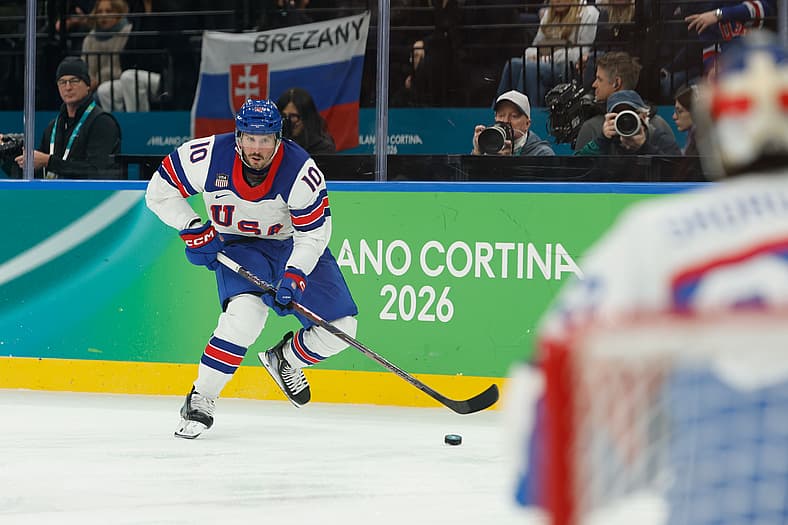
The Rangers captain put on his hard hat, checked his ego, and played a committed, gritty fourth-line role to help the United States capture the gold medal. Miller was physical, diligent defensively, and stood out alongside Trocheck as an elite penalty killer throughout the tournament. Sullivan and Team USA general manager Bill Guerin sought to build a team, not just a collection of superstars, and Miller’s willingness to accept and thrive in this secondary role was vital to their gold medal success. The 32-year-old did not record a point over six games, and largely played on the wing with Trocheck or Brock Nelson handling face-offs on the fourth line, but his fingerprints are there to see in this championship. Though he looked a bit slow at times amid the fast-paced action, Miller’s will was never in question.
Vincent Trocheck: B+
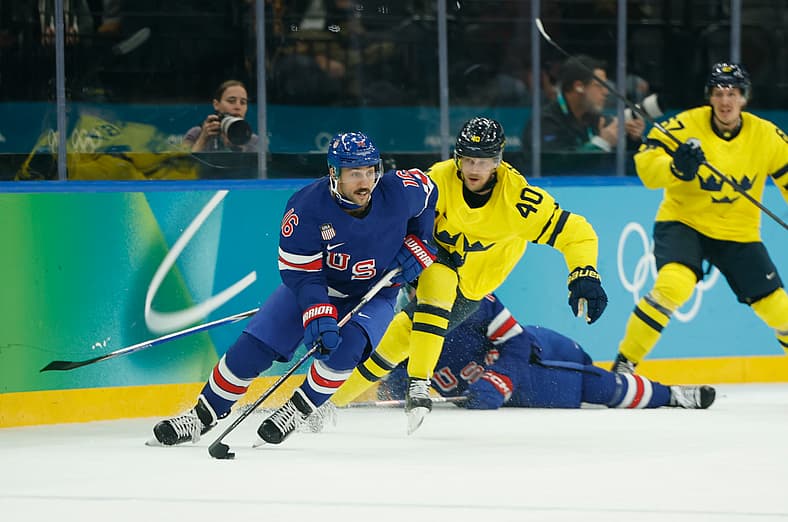
Trocheck seemed to delight in proving doubters wrong, showing that he did deserve to be on the stacked United States roster. “I’m pretty f*****g proud, I’ll be honest,” Trocheck told reporters after the gold medal victory Sunday against Canada. Like Miller, Trocheck did all the little things to help the United States achieve its big achievement. The 32-year-old center started the tournament as the 13th dressed forward, and ended it as a staple on the fourth line with Miller and Nelson. Trocheck was a demon in the face-off circle, finishing second in the Olympics with a face-off winning percentage of 66.67 percent. Sullivan trusted him to take take several draws in overtime against Sweden in the quarterfinals, including the initial puck drop. Like Miller, he was tenacious defensively, displayed grit and physicality, and was outstanding on the PK, helping the United States finish a perfect 18-for-18 on the penalty kill in the tournament. Trocheck also chipped in with three assists, and became cult hero with a viral video showing him telling his family postgame that he planned to, ahem, enjoy a few adult beverages to celebrate the gold medal win.
Mika Zibanejad: A-
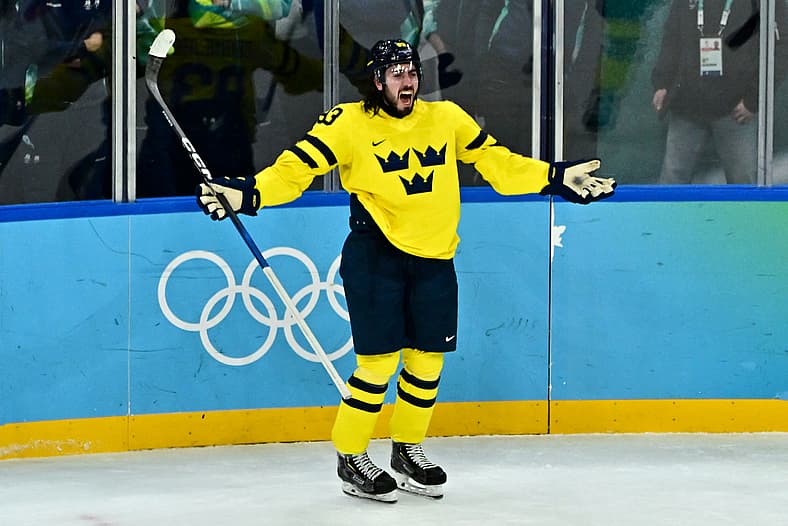
Zibanejad led Sweden with three goals and was second with six points in five games. Only four players in the tournament who played as few as five games recorded more points than Zibanejad, including teammate Lucas Raymond (eight points; one goal, seven assists). When Sweden desperately needed a goal to tie the United States late in the quarterfinals, they looked to Zibanejad in his favorite spot, set up in the left circle. And the 32-year-old forward delivered, scoring the 6-on-5 goal that forced overtime, though the United States escaped with the victory and kayoed Sweden just the same. Zibanejad had at least one point in four of five games, and recorded a pair of multi-point efforts, including a goal and an assist in the qualification play-off against Latvia. He also played a diligent 200-foot game, standing out as one of Sweden’s better two-way players in the tournament.