Resurgent Mika Zibanejad’s newfound leadership role crucial for Rangers

What a difference a year makes for New York Rangers center Mika Zibanejad, who on breakup day last week was squarely positioned as a foundational piece of the Blueshirts’ roster “retool” that begins in earnest this offseason.
With a bounce-back season under his belt, an extended run down the stretch with a pair of exciting young linemates, and perhaps most importantly, a significantly larger leadership role than he held in the past, Zibanejad came across as confident in what the near future holds in the final media session of the season.
“I want to be here,” Zibanejad said April 17. “I’ve been here now for 10 years. I’ve gone through the ups and downs … I think just seeing the teams that made the playoffs (in 2025-26) and seeing how quick a turnaround it’s been for some teams, I’m optimistic. Especially with the young guys coming in too … I don’t feel like we need a whole lot.
“I want to be here to turn this around again, and hopefully get another chance to win.”
Mika Zibanejad bullish on immediate future with Rangers
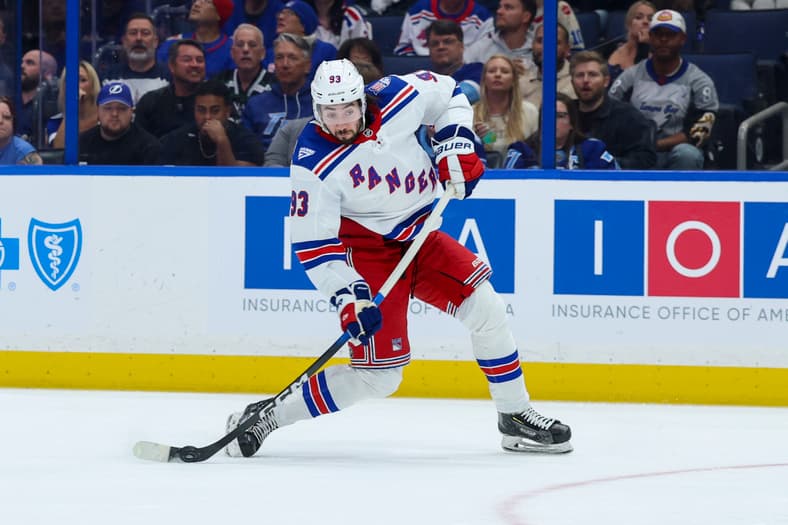
The recently-turned 33-year-old rebounded from a disconcerting 2024-25 campaign, when he recorded only 62 points – his lowest total in a full season since 2018-19 – by leading the Rangers with 34 goals and 78 points this season. That marked the third-best goal and point totals of his career.
His outstanding 200-foot game – which alarmingly dipped noticeably last season – also returned, with Zibanejad posting a 50.5 expected goal share, per Natural Stat Trick. It was the first time in four seasons that Zibanejad finished above 50 percent in the category, doing it for a team that posted a minus-12 goal differential.
Perhaps most encouraging was his late-season partnership with 24-year-old Alexis Lafreniere and highly-regarded 20-year-old rookie Gabe Perreault. That trio gave the Rangers a new-look top line that could be a force for years to come.
Though the Rangers missed the playoffs for the second straight season, and posted a worse record than they did in 2024-25 by finishing last in the Eastern Conference, Zibanejad’s tone was markedly different than it was on breakup day 2025.
Back then, the veteran center was angsty and troubled, speaking mostly about the “stress” of the season and “noise around our team” amid offseason and early-season roster upheaval that created friction between players and the front office over how it was executed. Zibanejad complained cryptically about lack of communication with higher ups and how “what I went through the first few months was probably the toughest I’ve ever been through in my career.”
Whether Zibanejad was right to harbor that level of dissastisfaction and annoyance over personnel moves throughout the season can be debated, but after 2025-26, it’s also in the past. Zibanejad’s much sunnier mood in reflecting on what’s to come last week – which included several easy smiles in response to questions from the media – seems to assure it.
Along with continuing his obvious chemistry with youngsters Perreault and Lafreniere (although there is a slim chance that the Blueshirts could try to trade Lafreniere this summer), Zibanejad played a noticeably bigger part in setting the example for the franchise’s on-ice direction – especially after how he came across just a year earlier. Though he’s served as an alternate captain since 2018-19, Zibanejad is not a rah-rah leader, and received the “A” on his jersey more in recognition of being a core player than anything else.
However, after his troubled 2024-25, Zibanejad’s steady and predictable persona returned throughout his resurgent season. That, along with his thoughtful and articulate way of speaking with the media, proved more important from a leadership standpoint than perhaps it ever had before for the Rangers.
That’s because of the presence of fellow center J.T. Miller, obtained from the Vancouver Canucks in January 2025 to bring fire, competitiveness and physicality to a dressing room much in need of it. The Rangers named Miller their 29th captain in September, with the organization doubling down on its hope that the 14-year veteran’s edgy personality would imbue the team with more passion and commitment on the ice.
It’s too early to tell whether that decision was a wise one. What’s certain about the acquisition and elevation of Miller within the organization is that the volatility and up-and-down emotions that led to problems in Vancouver – and with the Rangers in his first go-round on Broadway from 2012-18, along with a 94-game stint with the Tampa Bay Lightning – came with him from Western Canada.
Mika Zibanejad provided calming balance to J.T. Miller’s fiery leadership with Rangers
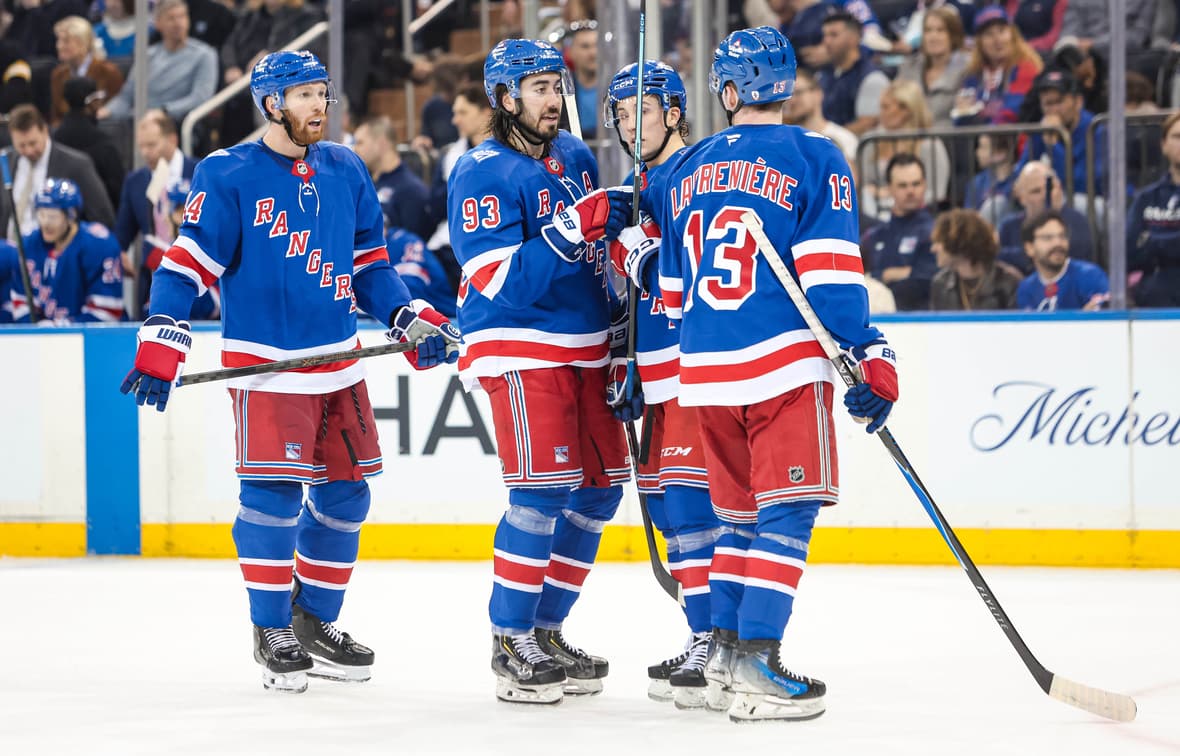
That’s why Zibanejad’s calm, even-keeled way is crucial for a group that’s expected to get younger over the summer. Set to occupy a top-six center spot along with Miller next season, Zibanejad – who it should be noted is close with Miller – helped to balance out the energy from his combustible, sometimes moody teammate in an injury-marred and frustrating 2025-26 (Miller played only 68 games and recorded 53 points).
That quiet strength offers a different perspective for the organization’s youth who look to prominent veterans to show the way forward. In an ideal scenario, the personalities of Zibanejad and Miller complement each other, giving the Rangers a greater range of leadership style that would benefit the team over the course of a long season.
Zibanejad’s most effective method of leading, of course, will be to continue producing the way he did this season. The dynamic skating and energy was back in his game, the lethality of his off-side slap shot on the power play returned under new coach Mike Sullivan. The pair forged a strong partnership after Sullivan made it a point to do so with Zibanejad last offseason after being hired May 2, 2025, with Zibanejad clearly buying in to what the two-time Stanley Cup-winning coach was selling.
Zibanejad’s return to form soundly to put to rest the idea that he was a player in decline, which appeared to be the case as he struggled through 2024-25. Whether his newfound spirit rubbed off on Lafreniere and Perreault once the trio was assembled, or the other way around, all three players were energized by joining forces.
“Playing with those two and seeing them take the steps that they did this year was a lot of fun. It was a lot of fun to be a part of that,” Zibanejad said. “They’re great guys, they care a lot. Obviously they have the talent and the skill, but I think throughout the season and the further we went along in the season, I thought they did a great job with everything else too.
” … They both deserve (their success) from how hard they work.”
A Rangers return to contention in 2026-27 remains far from assured. Regardless of the terminology used by the front office, the roster needs a major overhaul, one which brings in youth, speed and size. That’s much easier said in formal letters to fans than actually accomplished.
What’s no longer uncertain is the importance of Zibanejad in the club’s retool process. When all is said and done, in fact, it’s possible that Zibanejad will end up never having been more critical to the Rangers’ future than he is now.