Where do Rangers stand as they look toward training camp?

New York Rangers general manager Chris Drury was active in recent weeks as he seeks to put together a team that can get back to the Stanley Cup Playoffs this season after back-to-back misses. The team that assembles when training camp opens in Tarrytown, New York, in two months will look a lot different than the one that staggered to a last-place finish in the Eastern Conference in 2025-26.
But will “different” mean “better?” After all, the Rangers come off a 34-39-9 season that saw them miss the playoffs by 21 points. The only stat they led the NHL in was “times shut out” – they were blanked a League-leading 10 times, seven of those at Madison Square Garden.
Here’s a look at where the Rangers stand as the NHL takes a breath following the draft and start of free agency.
Goaltending
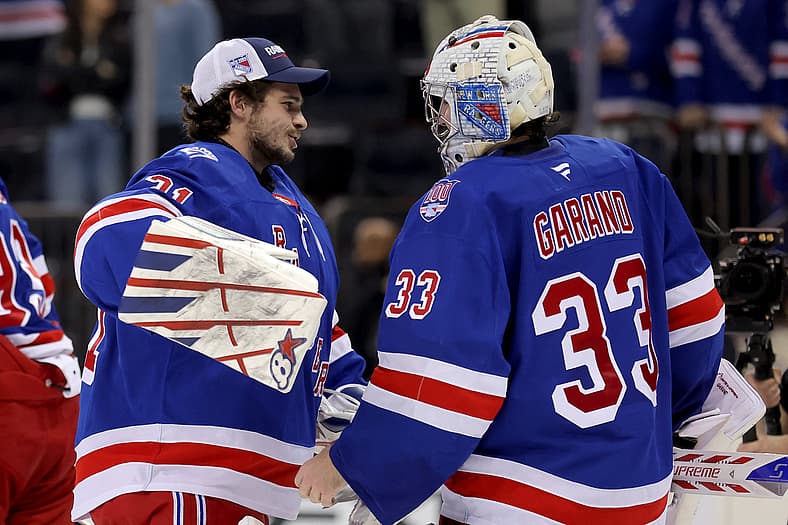
Igor Shesterkin is still among the elite goaltenders in the NHL as he enters the second season of an eight-year contract with an average annual value of nearly $11.6 million. The injury that knocked Shesterkin out of action for the final month of play before the Olympic break was a key factor in the Blueshirts’ demise – neither since-retired Jonathan Quick nor journeyman Spencer Martin properly compensated in for his loss.
2020 draftee Dylan Garand impressed coach Mike Sullivan and his teammates, including Shesterkin, after going 2-0-1 with a 1.62 goals-against average and .948 save percentage in three starts after a late-season callup. That was enough to earn him a two-year, $1.75 million contract and the expectation that the 24-year-old would be Shesterkin’s backup.
But Drury had other ideas, and on July 1 the Rangers sent a draft pick and low-level prospect to the Boston Bruins for veteran backup Joonas Korpisalo, who’s played 334 NHL games but was 14-9-6 with a 3.15 goals-against average and .894 save percentage in 31 games last season.
Korpisalo also carries a $3 million cap hit through 2027-28 – a pretty good-sized chunk of change for a backup goaltender. The Rangers aren’t likely to keep three goalies, and both he and Garand must clear waivers to be sent to AHL Hartford. It’s not impossible to think another team would grab Garand, while Korpisalo’s contract likely prevents a waiver claim. The Rangers can only bury $1.225 million of Korpisalo’s contract by sending him down, meaning they’d still be on the hook for $1.775 million.
Is the goaltending playoff-caliber?: Definitely — as long as Shesterkin stays healthy.
Biggest issue as camp nears: Which one of Garand or Korpisalo will get the call in the 25-30 games Shesterkin doesn’t play will be a key. The battle for the backup role will be one of the biggest topics at camp, especially with just four preseason games.
Defensemen
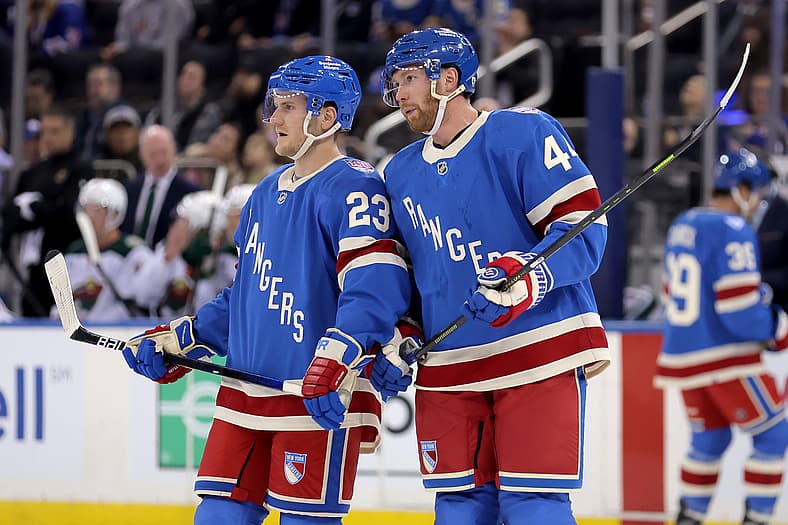
Drury remodeled his second and third pairs while wisely leaving the top pairing of Adam Fox and Vladislav Gavrikov alone.
Gavrikov, last summer’s big free agent addition, fit perfectly with Fox – as long as the 2021 Norris Trophy winner stayed healthy. Fox missed 27 games with injuries last season but still managed nine goals and 53 points in 55 games. Rival teams inquired about him early in the offseason, but Drury quickly made it clear that the Long Island native isn’t going anywhere.
In contrast, the likely second pair is all new. The Rangers traded Will Borgen to the Bruins, and acquired veterans Marcus Pettersson and Sean Durzi in trades with the Vancouver Canucks and Utah Mammoth, respectively. Pettersson, who has a long history with Sullivan from their days in Pittsburgh, figures to play the left side with Durzi on the right. Each should help New York’s breakout and transition games, and Durzi will get time quarterbacking the second power-play unit.
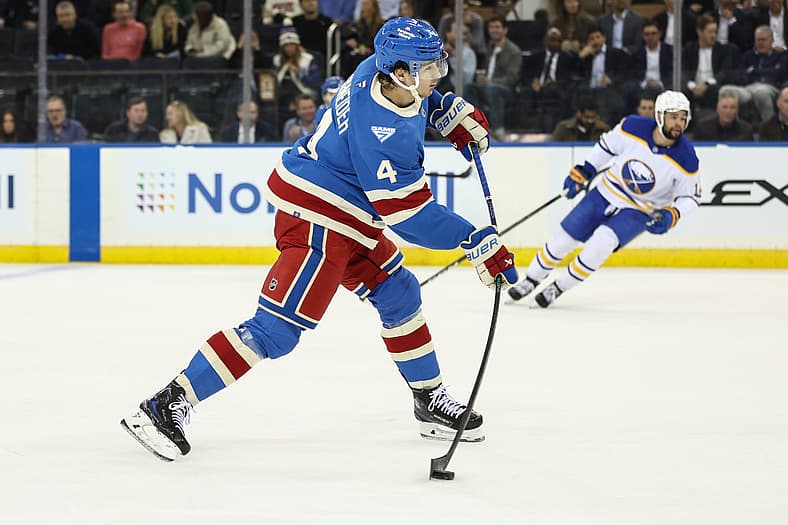
Braden Schneider and Matthew Robertson are expected to enter camp as the third pair. Schneider, who filed for salary arbitration, played all 82 games for the Rangers last season, finishing with 18 points (two goals, 16 assists) and averaged a career-high 20:27 of ice time. He led the Rangers with 140 blocked shots and ranked third in hits (163). But Schneider was on ice for more 5v5 goals-against (63) than any other Rangers player in 2025-26, and his expected goal share was 43.26 percent, according to PuckPedia, worst among all lineup regulars.
Robertson, a second-round pick in the 2019 draft, finally earned a regular role last season, and played well for the Rangers. He finished with six goals and 18 points, and averaged 17:24 of ice time in 72 games. That showing should be good enough to relegate Urho Vaakanainen and Vincent Iorio to the press box or the AHL next season.
Alberts Smits, taken by the Rangers with the No. 5 pick in the 2026 draft, is likely to start by playing top-four minutes in Hartford, barring a sensational camp. The same is true of Drew Fortescue, who didn’t look out of place in a nine-game, late-season NHL cameo.
Is the defense playoff-caliber?: Yes, largely thanks to the improved middle pairing. There’s good depth and promise for the future as well.
Biggest issues as camp nears: Getting the two second-pairing newcomers acquainted with each other. Sullivan will also want to get a read on Smits, who was regarded as the most NHL-ready of a pool of highly rated defensemen in the draft.
Top-six forwards
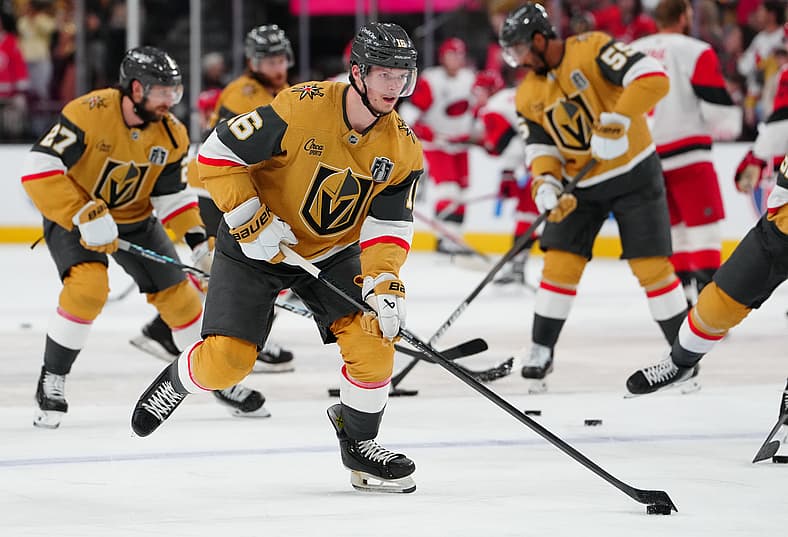
Drury weaponized New York’s salary-cap space to swing for the fences, landing high-scoring forward Pavel Dorofeyev from the Vegas Golden Knights and signing the 25-year-old sniper to a seven-year contract with an AAV of $11 million. Dorofeyev scored 35 and 37 goals the past two seasons; no wing on the Rangers got to the 25-goal mark in 2025-26.
The interesting question is who he’ll play with. The unit of Mika Zibanejad between Alexis Lafreniere and rookie Gabe Perreault thrived as the No. 1 line during the final weeks of last season, and Sullivan might well be reluctant to break up a trio that showed good chemistry, scored consistently, and played well on both sides of the puck.
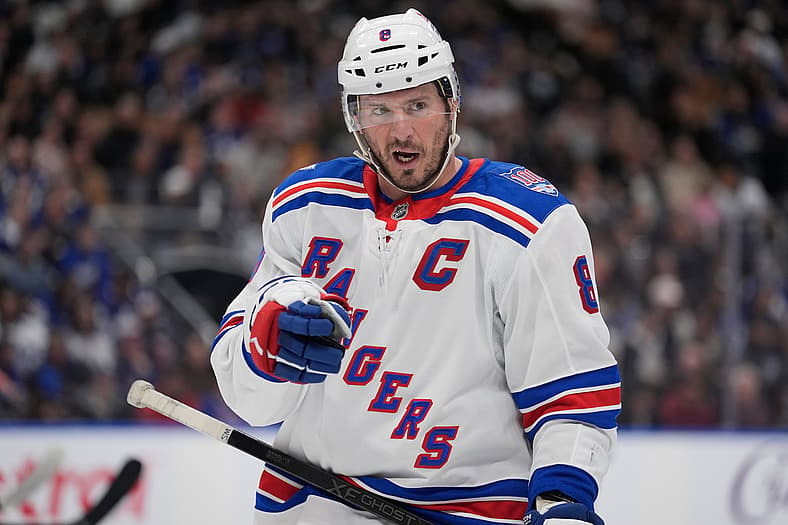
If the Zibanejad-Lafreniere-Perreault line stays together, Dorofeyev is likely to find himself on right wing with J.T. Miller as his center on the second line. The Rangers need the 33-year-old to rebound after a dreadful 2025-26 that saw him drop to 17 goals, 53 points and a team-worst minus-30 rating in 68 games. Injuries were a contributing factor, but there were too many nights when the Rangers’ captain was contributing to losses rather than wins. Still, he’s been a point-per-game player since 2021-22, even despite last season’s backslide, so the Rangers must hope a course correction takes place in 2026-27.
Another free-agent signee, Oliver Bjorkstrand, a right shot, could open camp on left wing with Miller and Dorofeyev. Bjorkstrand averaged 22 goals and 54.4 points per 82 games from 2021-25. But he struggled playing for the Tampa Bay Lightning last season, finishing with just 12 goals and 32 points and finishing minus-14 in 80 games. Bjorkstrand signed a one-year, $4.5 million contract, so the Rangers don’t have a huge investment in the 31-year-old.
Zibanejad, like Miller, is 33 but is coming off a 34-goal, 78-point season – leading the Rangers in both categories. But those are decent numbers, though not great, for a No. 1 center. Lafreniere, the first player taken in the 2020 draft, is still looking for a breakout season, and Perreault showed promise but still must get faster and add strength.
Is the top six playoff caliber: Adding Dorofeyev helps. But each of the top two centers is 33, and the top-line wings have yet to prove they’re anything more that decent NHL players. It’s hard to see this group as the top six on a playoff team.
Biggest issues as camp nears?: Sullivan is pretty sure of who his top-six forwards are, but how he’ll arrange them is another question. Dorofeyev is a finisher, but someone has to get him the puck. He and Miller must develop chemistry quickly if Sullivan keeps the Zibanejad line together.
Bottom-six forwards
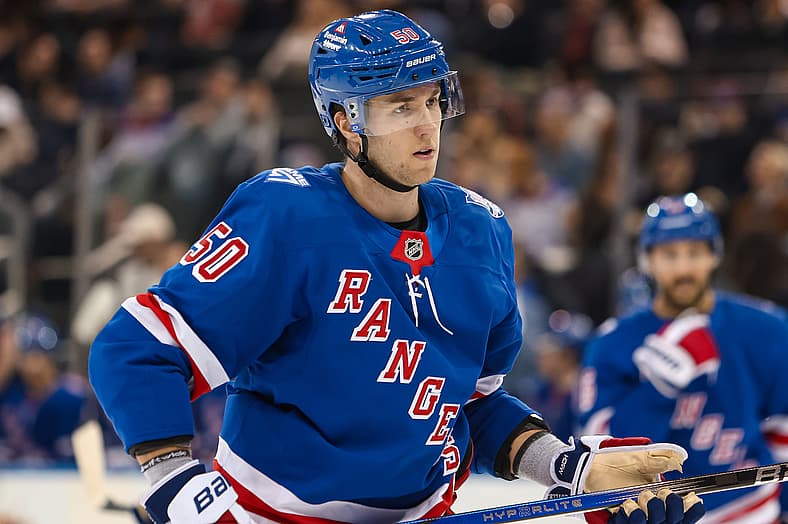
Drury got rid of some of the clutter in the bottom six by dealing Adam Edstrom and Brett Berard in separate trades. But the Vincent Trocheck trade also cost the Rangers a player who figured to be one of the League’s best third-line center options (who can also play higher In the lineup if needed).
Noah Laba had a solid rookie season and looks like a competent No. 3 center. He’s big, skates well and showed signs of being able to produce enough offense. Free-agent signee Joe Veleno is the front-runner for the fourth-line center role; he’s fast but has never shown the kind of skill that made him a first-round pick (No. 30) in the 2018 draft.
Signing Bjorkstrand should drop Will Cuylle to the third line, where he’s not being asked to play above his level. Cuylle had 20 goals and a team-leading 302 hits, but his assists dropped from 25 to 18, and his plus-minus plunged from plus-12 in 2024-25 to minus-12 last season. He could be paired on the wing with Tye Kartye, who played well after he was claimed on waivers from the Seattle Kraken after the Olympics, or Taylor Raddysh, who had an early-season hat trick but ended up with nine goals and 19 points in 68 games.
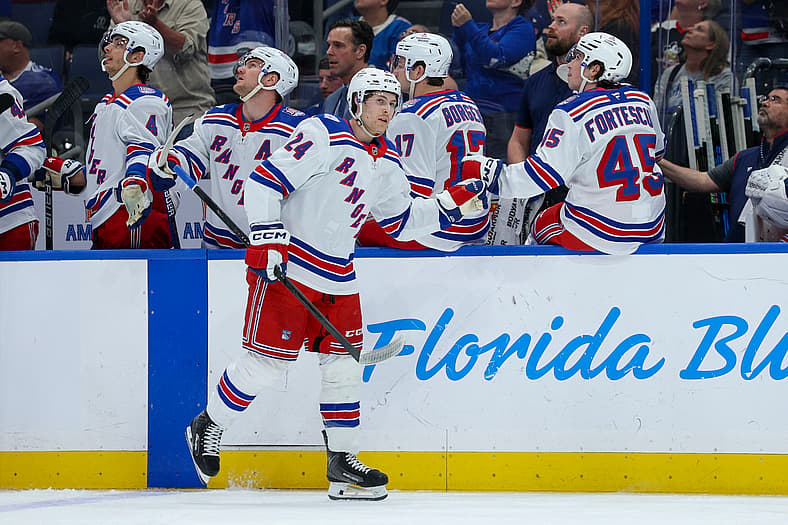
After that, there are more questions than answers. Jaroslav Chmelar is big, fast and shows promise. Everyone seems to love Adam Sykora. Matt Rempe missed most of last season with a thumb injury sustained in a fight. First-year pros like Liam Greentree, Nathan Aspinall, Jacob Battaglia and Cole Beaudoin are likely to begin the season in Hartford but could earn time with the big club at some point in the season.
Is the bottom six playoff caliber?: No. Laba and Cuylle would likely be the only players to make it on a legit Cup contender, though there’s upside with the youth here, and Veleno was a bottom-six fixture for the Montreal Canadiens last season when they made reached the postseason.
Biggest issues as camp nears: Will Laba take the next step? Who’s the third-line right wing? Was Veleno worth signing? What do they have in Chmelar? Can Rempe do more than fight? Will the rookies contribute at the NHL level?